
Understanding QDROs: Retirement Assets, Divorce and Tax Considerations
By Toring Consulting Services, Inc.
•
Introduction
A qualified domestic relations order is generally used to divide benefits under an ERISA-covered qualified retirement plan after divorce. It is not a substitute for plan-specific legal, tax or benefits advice.
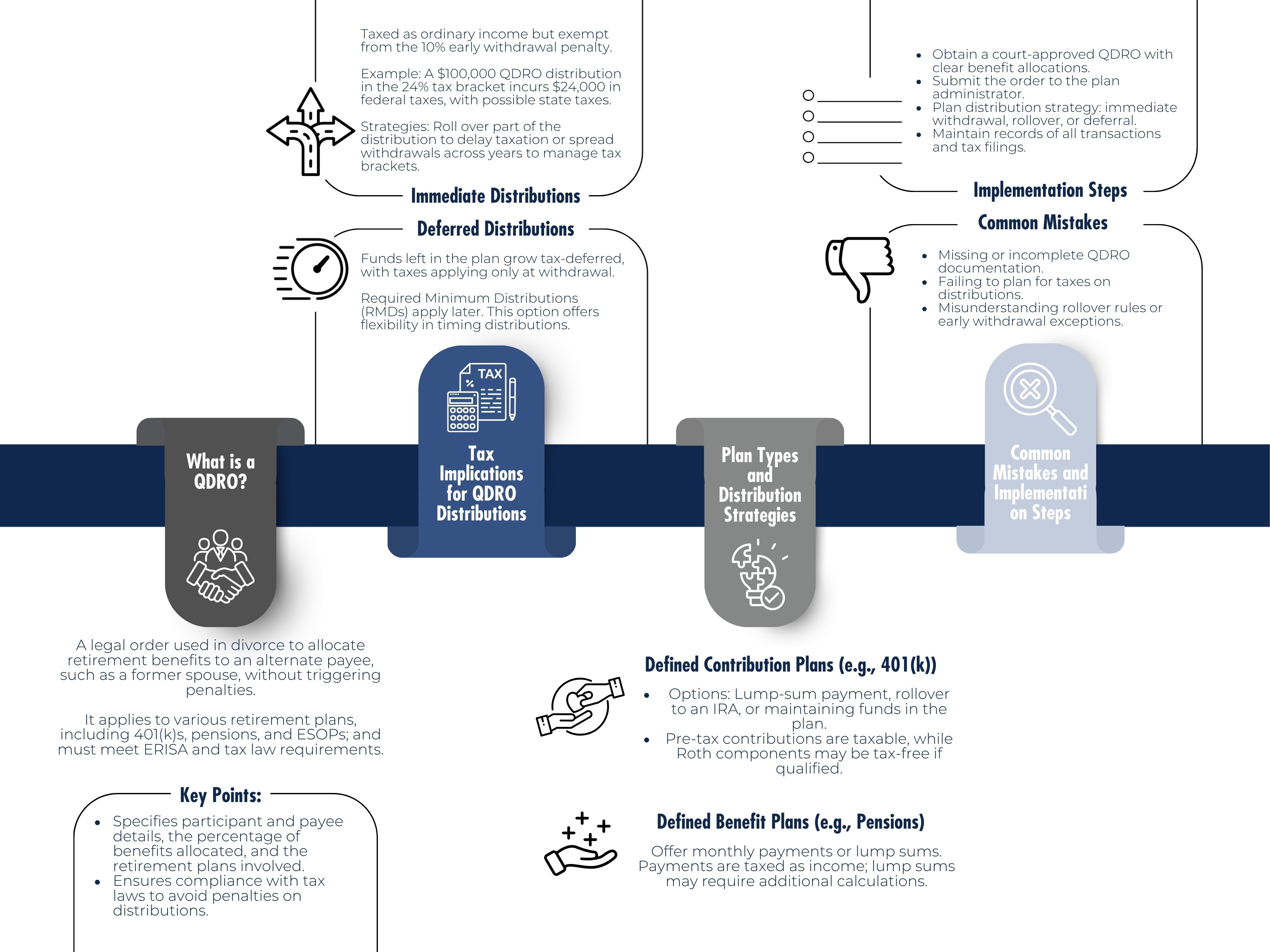
What is a QDRO?
Scope matters: IRAs are generally divided through a transfer incident to divorce, not a QDRO. Military retirement and government plans may require different orders or procedures. Obtain the plan administrator's current QDRO procedures before drafting.
Key Elements of a QDRO
Withholding and rollovers: the 20% withholding rule applies to an eligible rollover distribution paid to an alternate payee. A direct rollover generally avoids current withholding. Distribution timing and available forms depend on the plan and accepted order.
Tax Implications for Different Scenarios
Immediate Distribution to Alternate Payee
Tax Consequences for Early Withdrawals
General Tax Treatment
Subject to ordinary income tax in the year received
No 10% early withdrawal penalty under QDRO exception
Eligible for rollover to avoid immediate taxation
Withholding requirements depend on distribution method
QDRO Exception to Early Withdrawal Penalty
Standard 10% early withdrawal penalty (pre-age 59½) doesn’t apply
Exception only applies to distributions to alternate payee under QDRO
Must maintain clear documentation of QDRO status
Exception doesn’t apply to subsequent distributions from rolled-over accounts
Tax Planning for Early Access
1. Direct Distribution Considerations:
Immediate tax liability at ordinary income rates
No penalty regardless of age
May push recipient into higher tax bracket
Consider spreading distributions across tax years
2. Rollover Strategy Implications:
Subsequent withdrawals from rollover IRA subject to normal rules
10% early withdrawal penalty may apply after rollover
Consider setting aside funds for taxes if not doing direct rollover
60-day window critical for indirect rollovers
3. Withholding Requirements:
Mandatory 20% withholding on eligible rollover distributions
May be insufficient to cover total tax liability
Consider additional voluntary withholding
Quarterly estimated tax payments may be necessary
Strategic Considerations and Tax Impact Analysis
Calculating the Tax Impact
1. Immediate Distribution Tax Calculation:
Add distribution amount to other taxable income
Calculate tax liability at applicable marginal rate
Consider state tax implications
Factor in any tax credits or deductions
2. Tax Bracket Management:
Analyze current tax bracket
Project impact of distribution on marginal rate
Consider multi-year distribution strategy
Evaluate state tax consequences
3. Withholding Considerations:
20% mandatory withholding on lump-sum distributions
Can avoid withholding through direct rollover
Additional voluntary withholding available
60-day rollover window for indirect distributions
Example Tax Calculation
For a $100,000 QDRO distribution:
Federal tax (24% bracket): $24,000
State tax (5% example): $5,000
Mandatory withholding: $20,000
Potential additional tax due: $9,000
Strategies to Minimize Tax Impact
1. Partial Rollovers:
Roll over portion to IRA
Take partial distribution for immediate needs
Spread tax liability across years
2. Timing Strategies:
Coordinate with other income sources
Consider year-end tax planning
Evaluate life changes affecting tax status
3. State Tax Planning:
Review state-specific QDRO rules
Consider state tax rates in timing
Evaluate state tax credits/deductions
Deferred Distribution (Maintaining Account)
Tax Implications
No immediate tax consequences
Future distributions taxed as ordinary income
Required Minimum Distributions (RMDs) apply
Early withdrawal penalties may apply after transfer
Planning Opportunities
Investment gains accrue tax-deferred
Flexibility in timing distributions
Ability to coordinate with other retirement assets
Special Considerations for Different Plan Types
401(k) and Similar Defined Contribution Plans
Distribution Options
Lump-sum payment
Direct rollover to IRA
Maintain separate account within plan
Combination of methods
Tax Treatment
Follows general retirement account rules
Pre-tax contributions and earnings taxed as ordinary income
Roth portions may be tax-free if qualified
Basis considerations for after-tax contributions
Defined Benefit Pension Plans
Payment Structures
Monthly payments
Lump-sum distribution
Hybrid approaches
Tax Considerations
Regular payments taxed as ordinary income
Special calculations for lump-sum values
Survivor benefit implications
Common Mistakes and Pitfalls
Documentation Errors
Incomplete participant/payee information
Unclear benefit calculations
Missing plan identification
Inconsistent provisions
Tax Planning Mistakes
Failing to consider tax implications of distribution choices
Overlooking rollover opportunities
Misunderstanding early withdrawal exceptions
Incorrect withholding elections
Strategic Planning Opportunities
Timing Considerations
Tax year of distribution
Age-based planning
Coordination with other income
Market conditions for investments
Rollover Strategies
1. Direct rollover to traditional IRA
Maintains tax-deferred status
Provides investment flexibility
Avoids withholding requirements
2. Roth conversion opportunities
Pay taxes now for tax-free growth
Consider current vs. future tax rates
Evaluate long-term investment horizon
Cost Basis Planning
Track any after-tax contributions
Document basis allocation between parties
Maintain records for future distributions
Implementation Steps
1. Obtain Court Order
Ensure all required elements are included
Review with qualified legal counsel
Consider tax implications of proposed division
2. Submit to Plan Administrator
Follow plan’s QDRO procedures
Provide all required documentation
Monitor approval process
3. Plan Distribution Strategy
Evaluate immediate vs. deferred distribution
Consider rollover options
Assess tax implications
4. Execute Distribution
Complete required forms
Make withholding elections
Document transactions
Record Keeping Requirements
Essential Documents to Maintain
Copy of approved QDRO
Plan administrator acceptance letter
Distribution election forms
Rollover documentation
Tax basis records
Annual statements
Tax Reporting Documents
Form 1099-R for distributions
Form 5498 for rollovers
Records of after-tax contributions
Withholding statements
Special Situations
Special situations: coordinate multiple plans separately, determine whether a domestic-relations order is required for the specific arrangement, and confirm survivor-benefit treatment and plan administrator acceptance before implementation.
Implementation Steps
Implementation steps: obtain the plan's model language and procedures, have counsel prepare or review the order, submit it for qualification, wait for acceptance, then select a distribution or rollover method available under the plan.
Conclusion
Understanding the tax implications of QDROs is crucial for both the participant and alternate payee. Proper planning can help:
Minimize tax impact
Maximize available benefits
Ensure compliance with regulations
Avoid costly mistakes
Consulting with qualified legal and tax professionals is essential for navigating these complex arrangements effectively.
Conclusion
This information is for educational purposes only and is not legal, tax or investment advice. Divorce orders and retirement-plan distributions should be reviewed with qualified counsel, tax professionals and the plan administrator.